Brushstrokes & Bytes

Place to post casual notes and thoughts about my generative art journey and the art that inspires me.

Pioneers of Generative Art: Michael Noll

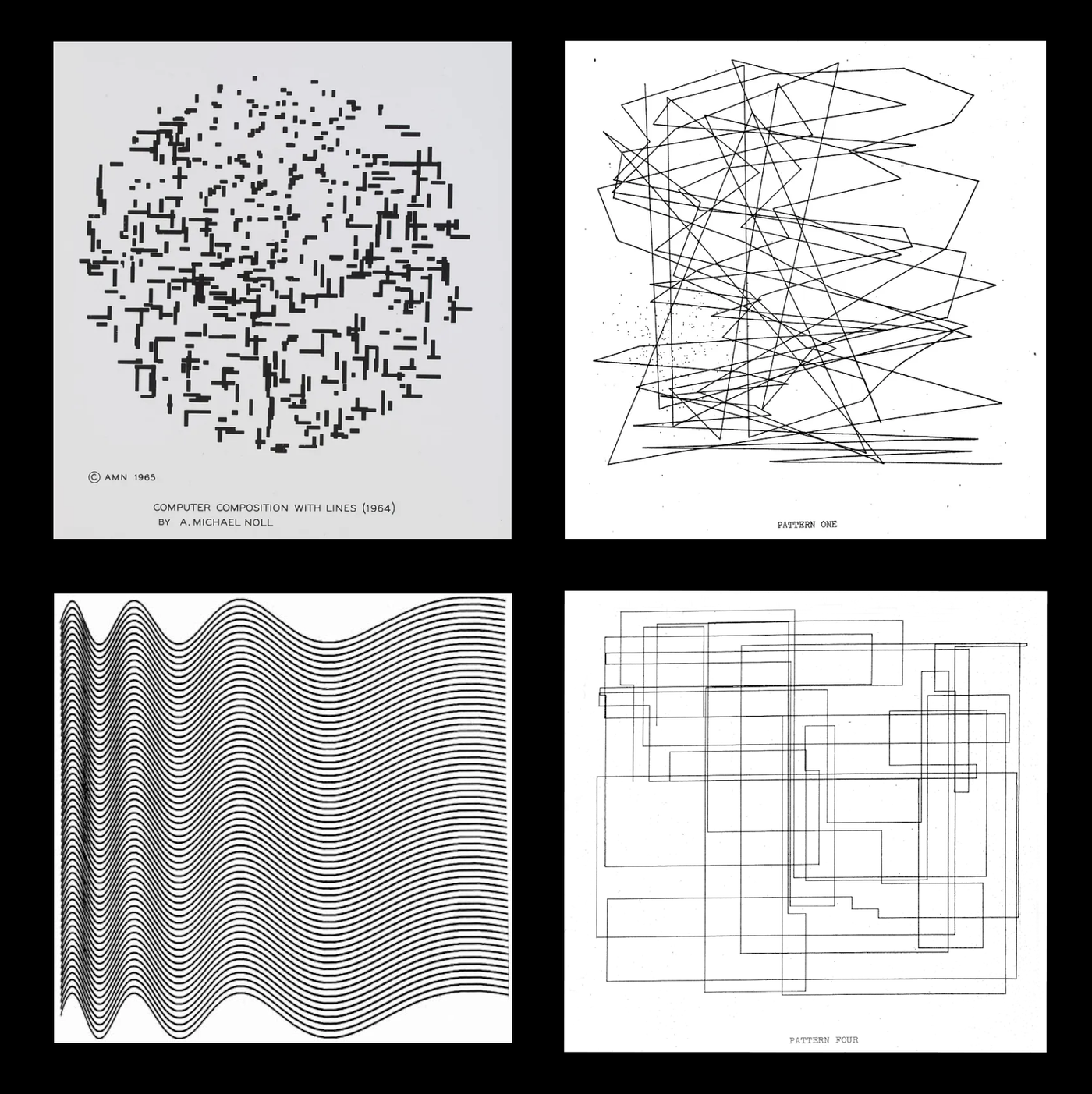
Michael Noll is a prominent figure in the history of generative art, recognized for his groundbreaking work in computer-generated art during the 1960s. As one of the earliest pioneers in the field, Noll’s exploration into algorithmic art began while working at Bell Labs, a hub for technological innovation. His work used computer algorithms to create patterns and designs, challenging traditional art forms and perceptions. One of his most famous works, “Computer Composition with Lines,” created in 1964, is considered a seminal piece in computer art. Noll’s experiments were artistic and investigated the psychological aspects of visual perception. He conducted pioneering studies on human responses to computer-generated images, bridging art with scientific inquiry. His work paved the way for the acceptance and understanding of computer-generated art in the broader art community. Noll’s contributions extended beyond art into the realms of 3D computer graphics and human-computer interaction, demonstrating the multidisciplinary impact of his research. He continues to inspire new generations of artists and technologists through his early experiments in today’s vast and evolving digital art field.

https://dam.org/museum/artists_ui/artists/noll-a-michael/
Pioneers of Generative Art: Michael Noll

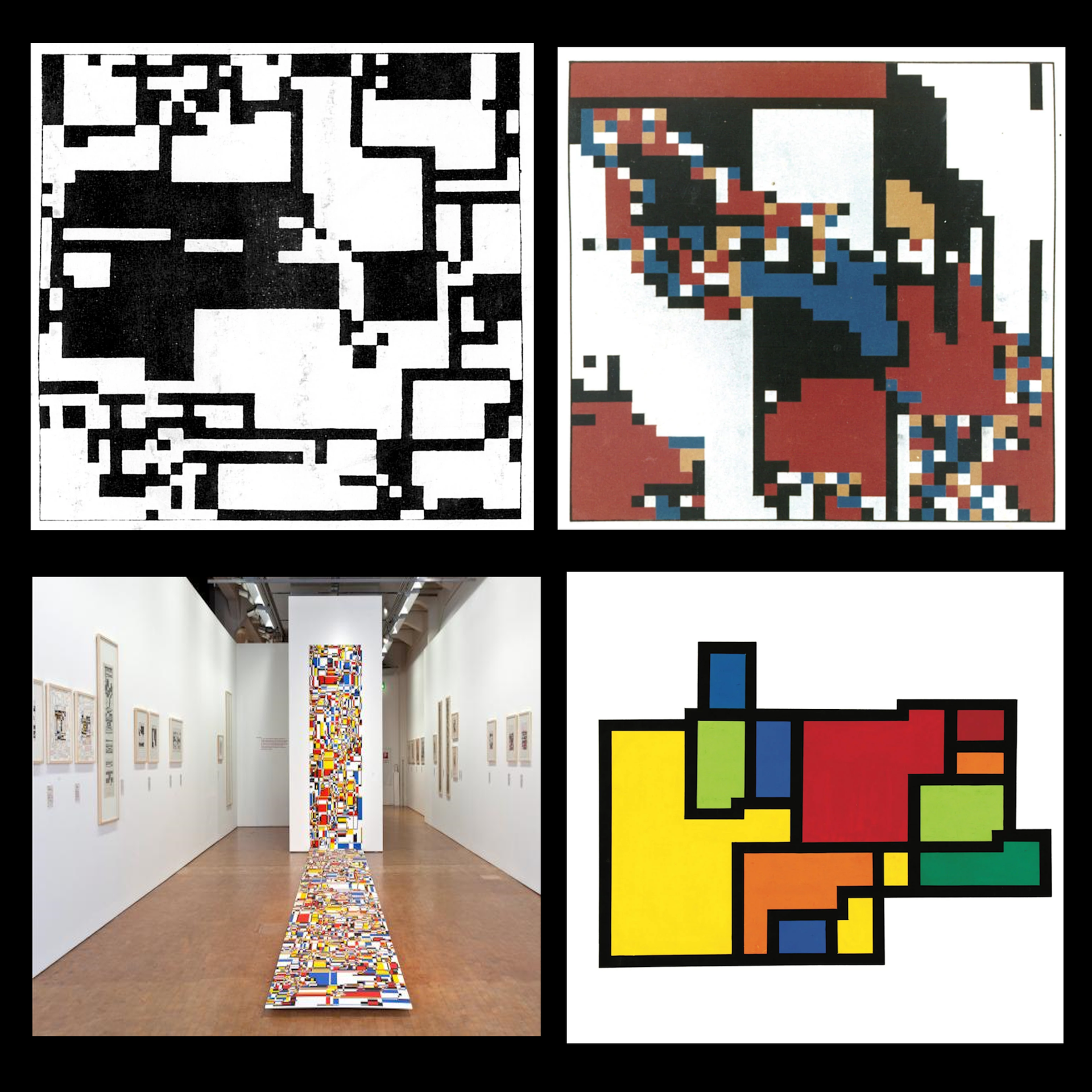
Pioneers of Generative Art: Hiroshi Kawano

Hiroshi Kawano, a Japanese artist, is recognized as a pioneer in generative art, particularly for his work with computers in the 1960s. His ground-breaking pieces often explored the intersection of technology and creativity, pushing the boundaries of what was possible with early computational tools. In September 1964, Kawano published the first work he had calculated using the OKITAC 5090A computer at the University of Tokyo in the Japanese IBM Review.

Kawano’s innovative approach laid the foundation for future generations of generative artists, inspiring them to explore the dynamic relationship between code, mathematics, and artistic expression. His legacy continues to influence contemporary digital artists seeking to harness the power of algorithms in their creative endeavours.

http://www03.zkm.de/kawano/

https://zkm.de/en/exhibition/2011/09/hiroshi-kawano-the-philosopher-at-the-computer

https://dam.org/museum/artists_ui/artists/kawano-hiroshi/

Pioneers of Generative Art: Hiroshi Kawano

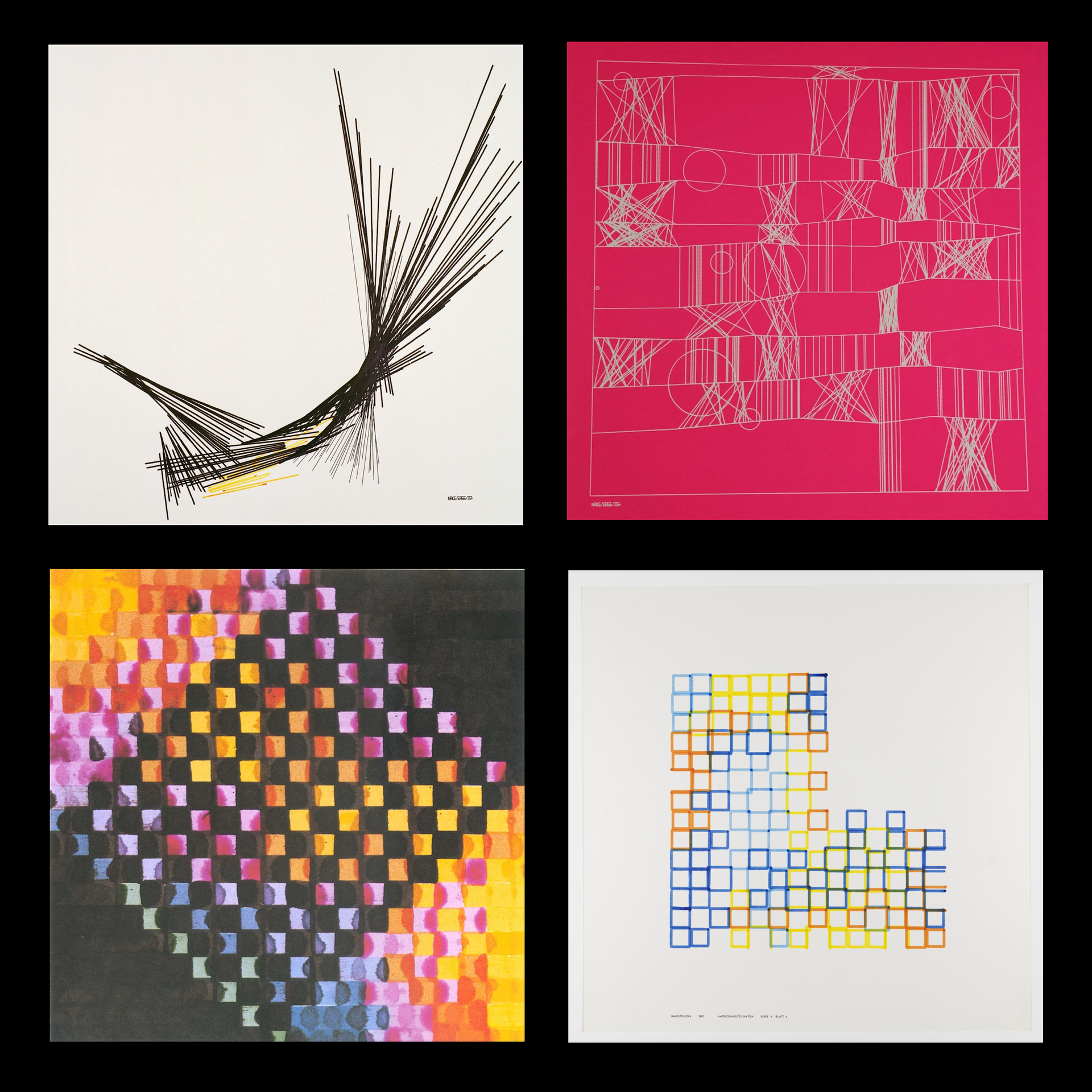
Pioneers of Generative Art: Frieder Nake

Frieder Nake is a distinguished figure in generative art, known for his pioneering work in computer graphics and algorithmic art. Emerging as a key player in the 1960s, Nake’s contributions were instrumental in developing computer art. Trained as a mathematician, Nake applied his expertise to explore the artistic potential of computer algorithms. His work is celebrated for its mathematical rigour and aesthetic appeal, exemplifying the fusion of art and computation. One of his notable works, “Matrix Multiplication,” created in 1967, is recognized as a landmark in algorithmic art. Nake’s art explores the relationship between the algorithmic process and the resultant visual forms. Beyond his artistic endeavours, Nake has made significant contributions to the theoretical foundations of computer art, writing extensively on the subject. He is also known for his role in developing computer graphics as an academic discipline.

https://dam.org/museum/artists_ui/artists/nake-frieder/

https://www.tate.org.uk/art/artists/frieder-nake-17874

Pioneers of Generative Art: Frieder Nake

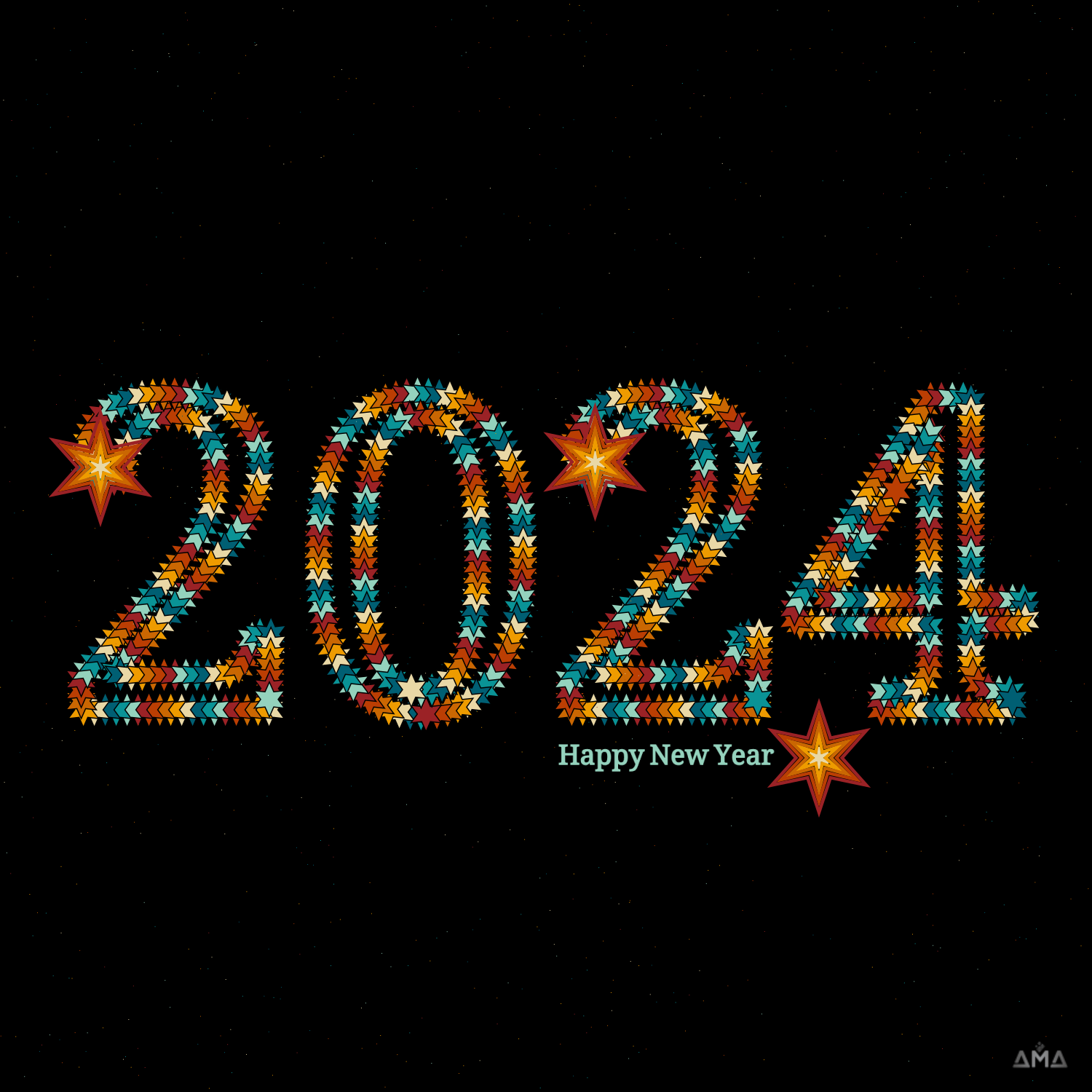
Happy New Year to everyone!

This year let’s open our hearts and minds to new inspirations. Whether you’re a seasoned artist, a curious beginner, or simply someone who appreciates the beauty of creativity, there’s always something new to discover. Let’s explore the untapped potential within ourselves and the world around us.

May this year bring us a renewed sense of wonder and the courage to experiment. Whether it’s picking up a new skill, revisiting an old hobby, or simply taking a moment to appreciate the art in everyday life, every step is a step towards nurturing your creative soul.

Let’s all find joy in the little things, inspiration in the unexpected, and the strength to keep pushing the boundaries of our creativity. Here’s to a year filled with artistic exploration, personal growth, and an ever-deepening appreciation of the world of generative art.

Happy New Year! Let’s make 2024 a year of vibrant creativity and inspiring discoveries!

Happy New Year

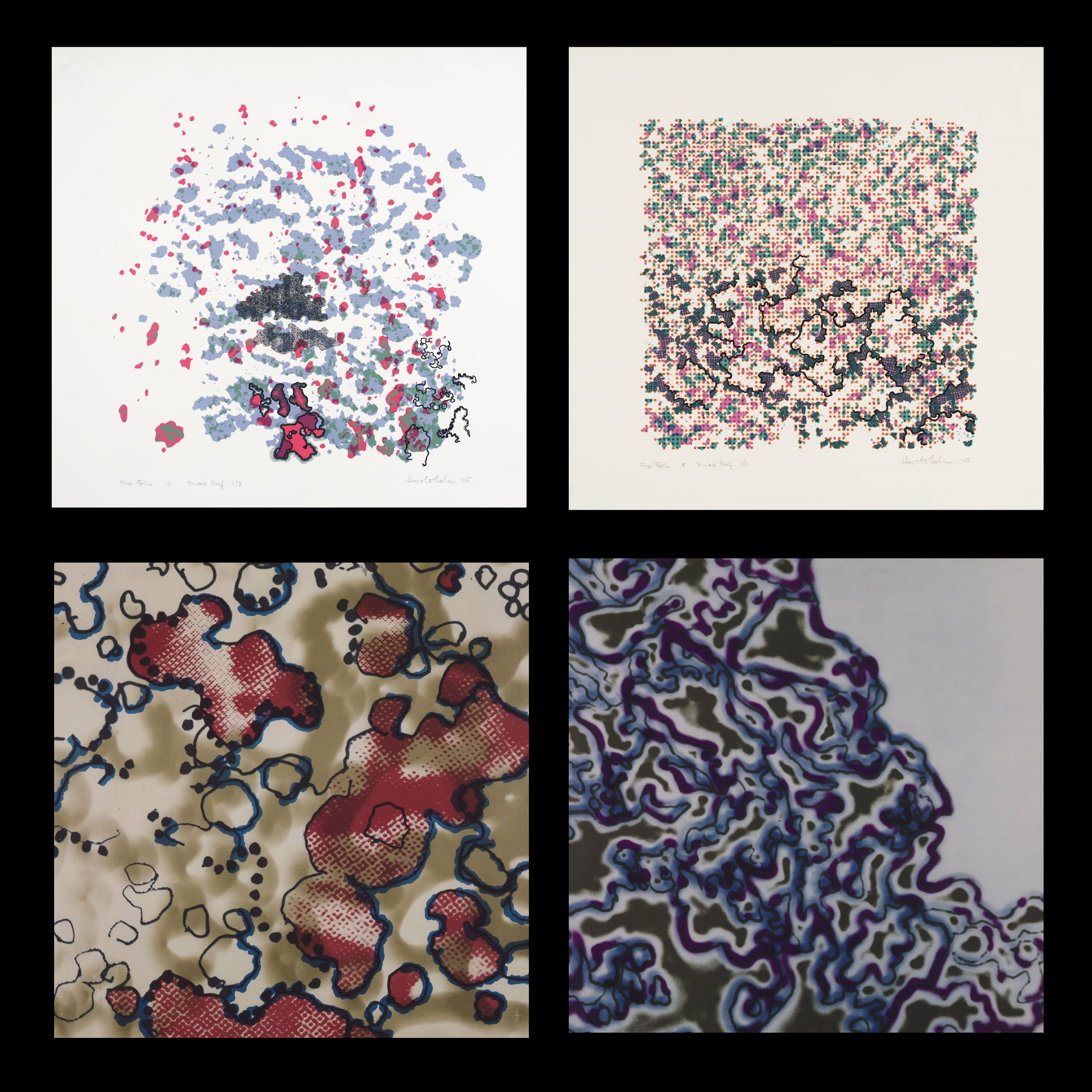
Pioneers of Generative Art: Harold Cohen

Harold Cohen was a pioneer in generative art. Initially a traditional painter, Cohen’s interest shifted towards artificial intelligence and its potential for art creation in the late 1960s.

He is best known for developing AARON, a computer program he started working on in 1968, which became a lifelong project. AARON was revolutionary in its ability to generate original artwork, pushing the boundaries of the relationship between technology and art. Cohen’s work with AARON challenged traditional notions of creativity, questioning the artist’s role in the creative process.

Cohen’s approach was not just technical; he deeply explored the philosophical and aesthetic aspects of creating art with AI. His work has been exhibited in major institutions worldwide, highlighting the intersection of art and technology. His pioneering efforts have established him as a key figure in digital and generative art history.

https://www.tate.org.uk/art/artists/harold-cohen-925

Arnolfini — Series: https://dam.org/museum/artists_ui/artists/cohen-harold/

Pioneers of Generative Art: Harold Cohen

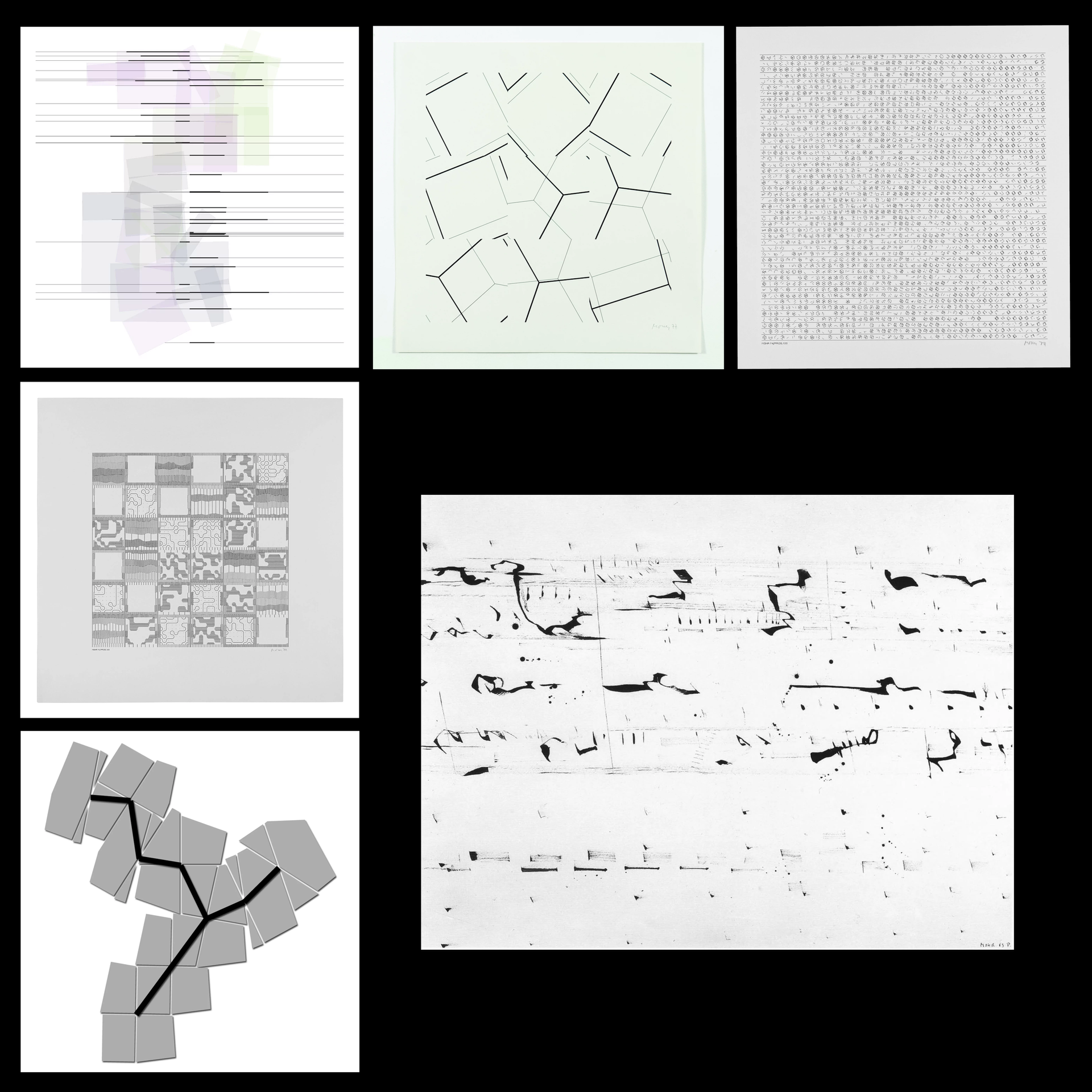
Pioneers of Generative Art: Manfred Mohr

Manfred Mohr was born in 1938 in Germany and began as a painter and jazz musician, which later influenced his digital art.

What makes Mohr unique is how early he started using computers for art in the 1960s. He was among the first to use computer algorithms to create art, focusing on simple geometric shapes like cubes.

His art is famous for its focus on the cube and its different directions, something he calls the “hypercube.” He uses computer programs to break down and rearrange cubes, creating complex and fascinating patterns.

In the 1970s, Mohr started exploring more complex shapes and the idea of randomness under strict rules. This mix of unpredictability and strict geometry is what makes his art unique.

Manfred Mohr’s work is essential because it looks beautiful and shows how computer algorithms can create surprising and creative art.

https://dam.org/museum/artists_ui/artists/mohr-manfred/

Pioneers of Generative Art: Manfred Mohr

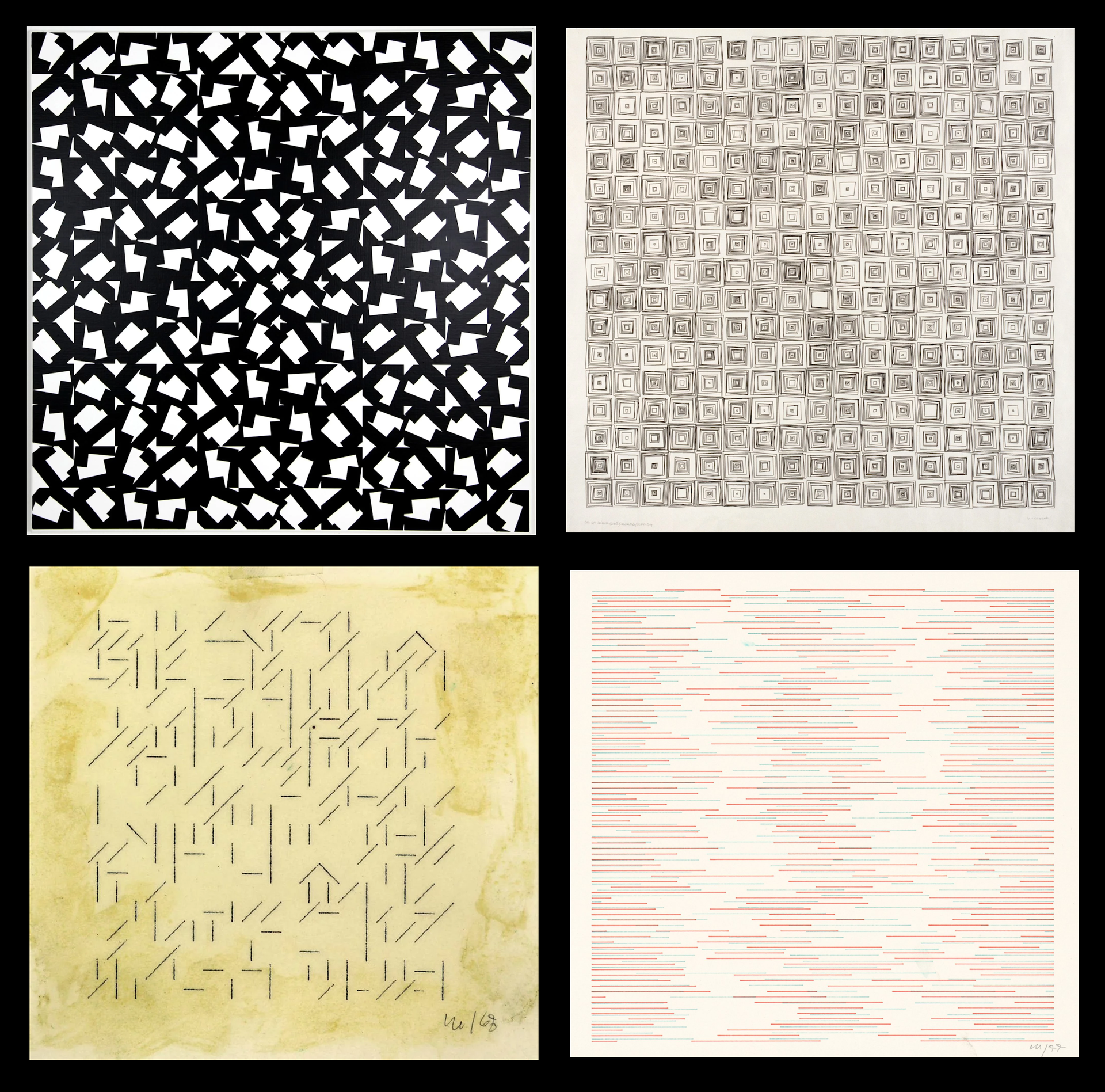
Pioneers of Generative Art: Vera Molnár

I decided to explore the history of generative art. I want to learn more about the pioneering artists who shaped this fascinating field.

The 1960s marked a significant era as artists began experimenting with algorithms and computers to create art. This revolutionary approach challenged traditional art forms, introducing a blend of mathematical precision and creative expression.

Among these pioneers was Vera Molnár, a Hungarian-born French artist whose work with geometric shapes and computer algorithms laid the groundwork for future digital artists. Her exploration of order and randomness in art set a new benchmark for artistic innovation.

The use of computers in the late 1960s signified a monumental shift. Artists like Molnár utilized these machines as tools and collaborators in the creative process, opening up a world of possibilities in art creation.

http://www.veramolnar.com/

https://dam.org/museum/artists_ui/artists/molnar-vera/

Generative Art Exploration Chapter V: The Life and Work of Vera Molnár

Pioneers of Generative Art: Vera Molnár

Embracing Randomness in Generative Art

As an IT professional, I’ve often found myself drawn to the allure of control and precision. However, as a generative artist, I’ve come to appreciate the beauty of randomness. It’s a liberating experience that can help control freaks like myself step out of our comfort zones and unlock new artistic possibilities.

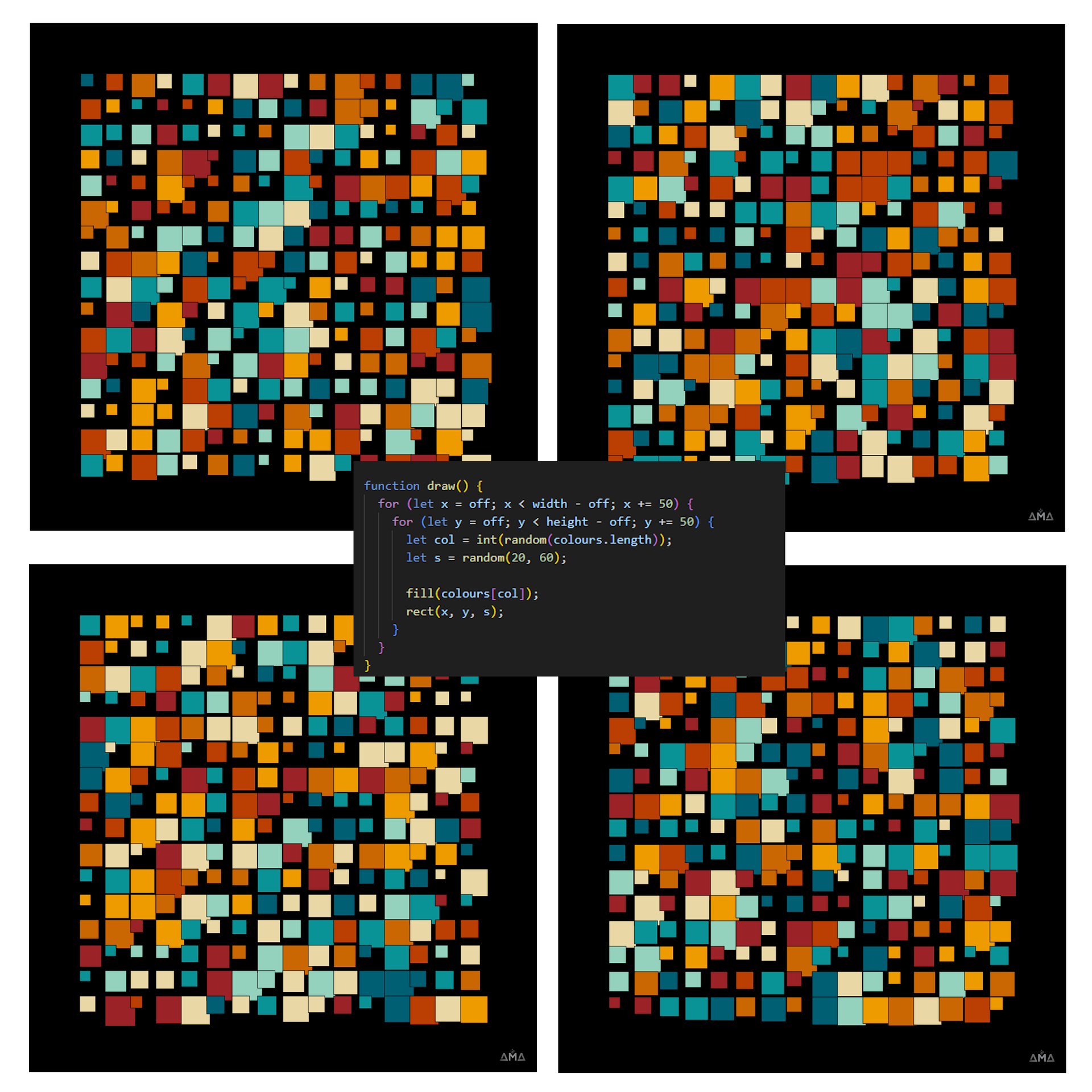
I create or start most of my work using P5.js, a versatile JavaScript library for creative coding. You can create unpredictable variations in your artwork by integrating random functions into your code. For instance, consider using random() to generate different colours, shapes, or patterns, giving your art a dynamic and ever-changing quality. Take the example of a simple generative art project where random lines are drawn on a canvas. The lines appear differently each time the code runs, leading to a delightful surprise with every iteration. This spontaneity can be exhilarating for those used to strict control.

Psychologically, this approach offers several benefits. It encourages us to let go of the need for perfection and embrace imperfections as part of the creative journey. It fosters a sense of curiosity and exploration, where we’re not just creating art but also discovering it along the way.

Incorporating randomness into generative art is a reminder that beauty can emerge from chaos, and innovation often arises from unpredictability. So, whether you’re a control freak or someone looking to infuse your art with fresh energy, consider letting randomness guide your creative process. It may lead you to unexpected and breathtaking artistic horizons.

In my case, I keep two constants — a black background and my colour palette. In all other aspects, I welcome surprises, or at least I try. I need to do it more often.

Embracing Randomness in Generative Art

Generative Art

Generative art is a creative practice using algorithms and computer code to produce unique and unpredictable visual artworks. It’s a fascinating fusion of technology and artistry, where the artist’s role is to design the rules and parameters that guide the algorithm’s output rather than directly crafting each element by hand.

The history of generative art dates back to the mid-20th century when artists and mathematicians started experimenting with computer-generated visuals. Early pioneers like Frieder Nake and Georg Nees used simple computer programs to create intricate patterns and designs. In the 1960s and 70s, artists like Vera Molnár and Manfred Mohr continued to explore the potential of algorithms in art.

Today, artists from various backgrounds use coding languages like Processing, Python, or specialized software to craft intricate and thought-provoking generative artworks.

In my blog, I’ll share how it’s been my escape from life’s chaos, a tool for focus in a multitasking world, and a way to slow down in our fast-paced reality.